
|
|
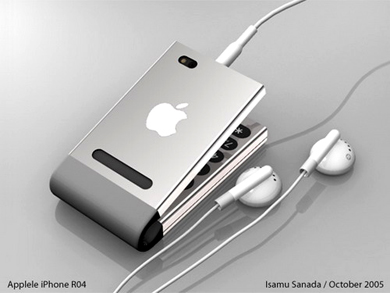
New rumors of the iPhone developed last night from Digg on a vidcast.
According to the reporter; the iPhone will be launched in January on all CDMA and GSM providers. The handset will sport a small form factor and will house two battery designs (with single charger); one for playing music, the other for phone functions.
The iPhone will run on flash memory of 4GB for $249 or the 8GB for $449. The possibility of a slideout keyboard is suggested as well, and QWERTY keys eliminated.
Via Engadget
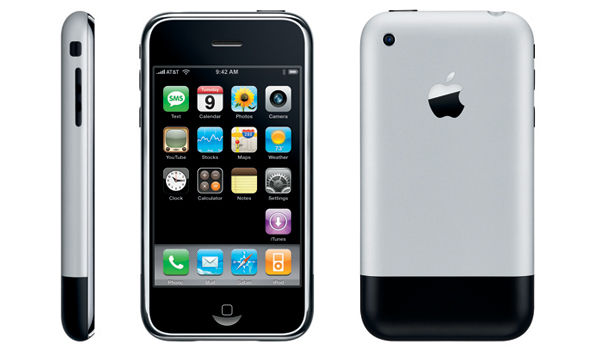
Even if you love Apple or hate it, you must think of the revolution this company made on smartphones market. Before the first iPhone was released, the coolest and the top selling phone for the past years was Motorola RAZR. This smartphone is on the first place, it is a leader market, and for sure it is the best selling phone in the last year. There are almost two years since the original iPhone has been released, and only few months ago the 3G version was released. Both phones miss some features, but the current version is much better, it definitely has some cool improvements. I will just briefly analyze in this article the differences between iPhone 2G and the newer version, 3G. There aren't too many differences in the design matter, but I will point out the existing ones, before getting to the inner parts. The screens are both the same size, 3.5'', and they have the same 480x320 resolution. The original iPhone has a smooth metallic finish on the rear, with a black strip at the bottom. On the front part, it has a shiny metal piece, which is around the side of the phone, and it also goes behind of the screen. 3G has a piano black or white finish and the shiny metal piece is around the screen. iPhone 3G also has buttons made of a metal, excluding the Home button. This makes iPhone 3G look sturdier than the original version. The shape is a big difference between these two models, and I would like to point out that 2G is a little thicker and flat when set down, and that 3G is a little bit more round. Some people say that 3G's screen heats at a warmer temperature than 2G's screen does. Let's get to the inside part, and we can observe that 3G has outstanding features compared to the original version. iPhone 2G supported WiFi, GSM and Bluetooth, but iPhone 3G supports, as the name suggests, 3G technology next to WiFi, GSM and Bluetooth. This makes surfing, watching videos and downloading better experiences, and the frequencies supported by the first generation didn't include UMTS/HSDPA (850, 1900, 2100 MHz), which are available on iPhone 3G. A new feature on the latest model is GPS, which is absolutely necessary nowadays. Both smartphones have 2MP cameras, but none has the video recording feature. iPhone 3G weighs 0.1 ounces less than the previous version, which weighted 4.8 ounces. 3G's big disappointment would be that its battery drains fast. iPhone 2G rocks because it has 8 hours of talk-time and 3G offers 5 hours.
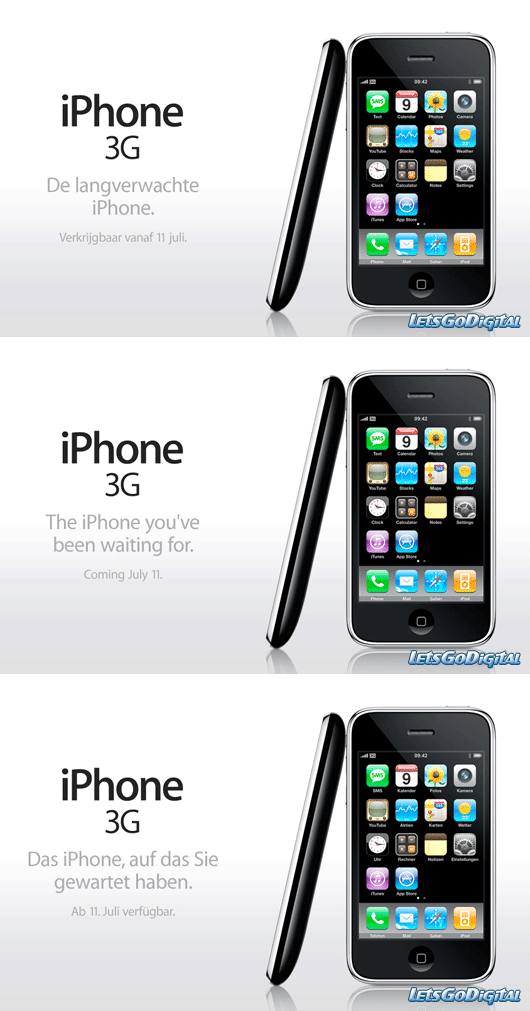
The iPhone 3G is the second generation of iPhone. It was the successor to the original iPhone, and is succeeded by the iPhone 3GS. Introduced on June 9, 2008 at the WWDC 2008 at the Moscone Center, San Francisco. The 3G was very similar to its predecessor, containing the same 2 MP camera and no support for video recording, and its performance was limited by the same 128 MB eDRAMmemory unit. Nevertheless, the 3G featured several improvements over the original. It supported Assisted GPS, 3G data and Tri-bandUMTS/HSDPA.
The iPhone 3G runs Apple’s iOS operating system, the same operating system used on previous iPhones, the iPad, the Apple TV, and the iPod Touch. It is primarily controlled by a user’s fingertips on the multi-touch display, which is sensitive to fingertip contact.
The iPhone 3G no longer receives software updates from Apple as of March 11 2011, which was the date iOS 4.3 was released. It is no longer supported.
The iPhone 3G came preloaded with the latest version of iPhone OS both to offer the newest improvements to the software and to combat efforts of jailbreaking. Over the years, the iPhone 3G has been supported by Apple with software updates. Major iterations of the software usually released yearly.
At launch, in July 2008, the iPhone 3G came preloaded with iPhone OS 2.0 which introduced the App Store, Microsoft Exchange ActiveSync support, Apple’s MobileMe service, and push email support, along with other new features and bug fixes as well.
On June 2009, the iPhone 3G received the iPhone OS 3.0 software update which introduced the long-awaited MMS feature, copy and paste, landscape support for more applications, Bluetooth stereo support, and other improvements as well.
On June 2010, the iPhone 3G owners were issued the iOS 4.0 software update. Unlike its successor, the iPhone 3GS though, it did not receive multitasking, home screen wallpaper, or Bluetooth keyboard support. However, it still got the unified mailbox feature, folders, playlist creation, among other enhancements in iOS 4. Still despite the number of new features the update introduced, it was widely criticized for its slow performance on the device.
However an update to iOS 4.1 was unveiled and released on September 2010 which improved the device’s performance under iOS 4. Unlike other iOS devices though, it did not receive the Game Center application.
On November 22, 2010, the iPhone 3G received the iOS 4.2 software update, which included new features such as YouTube voting, and security fixes. The iPhone 3G however did not receive many features including AirPlay, more options in the multitasking tray, and Safari Text Search.
On January 12, 2011, the iOS 4.3 software update beta 1 was issued to developers. However, there are no iPhone 3G download links. The iPhone 3G is no longer supported by Apple in software updates.
On March 9, 2011, the iOS 4.3 software update officially announced, which was the first iOS software update leaving out the support of iPhone 3G.
The iPhone 3G's back features a redesigned plastic polycarbonate housing, replacing the aluminum back from the first generation. The buttons were also made from plastic to metal, and the edges of the phone were also tapered, providing a better grip of the phone. The iPhone 3G also introduced colors to the iPhone bringing black and white backs to the device. However only the 16GB version was available in both colors. The dimensions of the iPhone 3G were slightly larger than those of the original iPhone. It was 4.55 inches (116 mm) high, 2.44 inches (62 mm) wide, and 0.48 inches (12 mm) deep, compared to its predecessor, which was 4.5 inches (110 mm) high, 2.4 inches (61 mm) wide, and 0.46 inches (12 mm) deep.
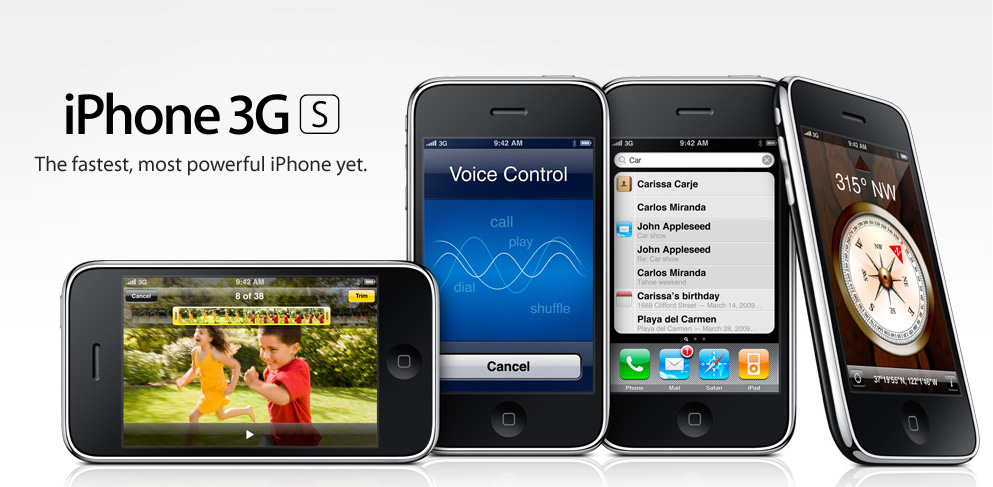
The iPhone 3GS is the third generation of iPhone designed and marketed by Apple Inc. It was introduced on June 8, 2009 at the WWDC 2009 which took place at the Moscone Center, San Francisco.
Its features primarily consist of faster performance, a camera with higher resolution and video capability, voice control, and support for 7.2 Mbit/s HSDPA downloading (but remains limited to 384 kbps uploading as Apple had not implemented the HSUPA protocol). It was released in the U.S., Canada and six European countries on June 19, 2009, in Australia and Japan on June 26, and internationally in July and August 2009.
The iPhone 3GS runs Apple's iOS operating system, as is used on the iPad and the iPod touch. It is primarily controlled by a user's fingertips on a multi-touch display.
The iPhone 3GS is preceded by the iPhone 3G and succeeded by the iPhone 4.
The new features of the iPhone 3GS are mainly internal changes regarding speed (indeed the "S" in "iPhone 3GS" stands for Speed).Though in addition to the upgrades mainly regarding performance, various software features were also introduced exclusive to the iPhone 3GS. All of these exclusive features have since then been incorporated and/or improved in the iPhone 4 making these features not exclusive to the iPhone 3GS anymore.
The iPhone 3GS is powered by the Samsung APL0298C05 chip, which was designed and manufactured by Samsung. This system-on-a-chip is composed of an ARM Cortex-A8 CPU core underclocked to 600 MHz (from 833 MHz), integrated with a PowerVR SGX 535 GPU. It also has 256 MB of eDRAM. The additional eDRAM supports increased performance and multi-tasking in iOS 4.
Apple claims the iPhone 3GS is 2x faster than its predecessor, showing demonstrations of apps loading in just 2–10 seconds compared to 15–30 seconds on the iPhone 3G.
The display on the device is designed by Apple and is manufactured by LG, it features an LCD capacitive touchscreen with a pixel density of 163 pixels per inch (ppi) on a 3.5 inch (9 cm) (480-by-320) display. Improvements over its predecessor's screen include 24-bit color emulation (18-bit color display plus dithering) for a more color rich display and oleophobic coating to help reduce fingerprints on the display. The capacitive touchscreen is designed for a bare finger, or multiple fingers for multi-touch sensing.
The iPhone 3GS retains the same design its predecessor used which featured a glossy plastic back with tapered edges which gives users a better grip of the phone. It also features metal buttons just like its predecessor's. The iPhone 3GS and its predecessor are almost identical though the 3GS is differentiated only by the latter's reflective silver text on the reverse side which now matches the silver Apple logo, replacing the 3G's grey text. Unlike its predecessor, the iPhone 3GS was available in white and black for both models (16 GB and 32 GB) although the current 8 GB model is only available in black.
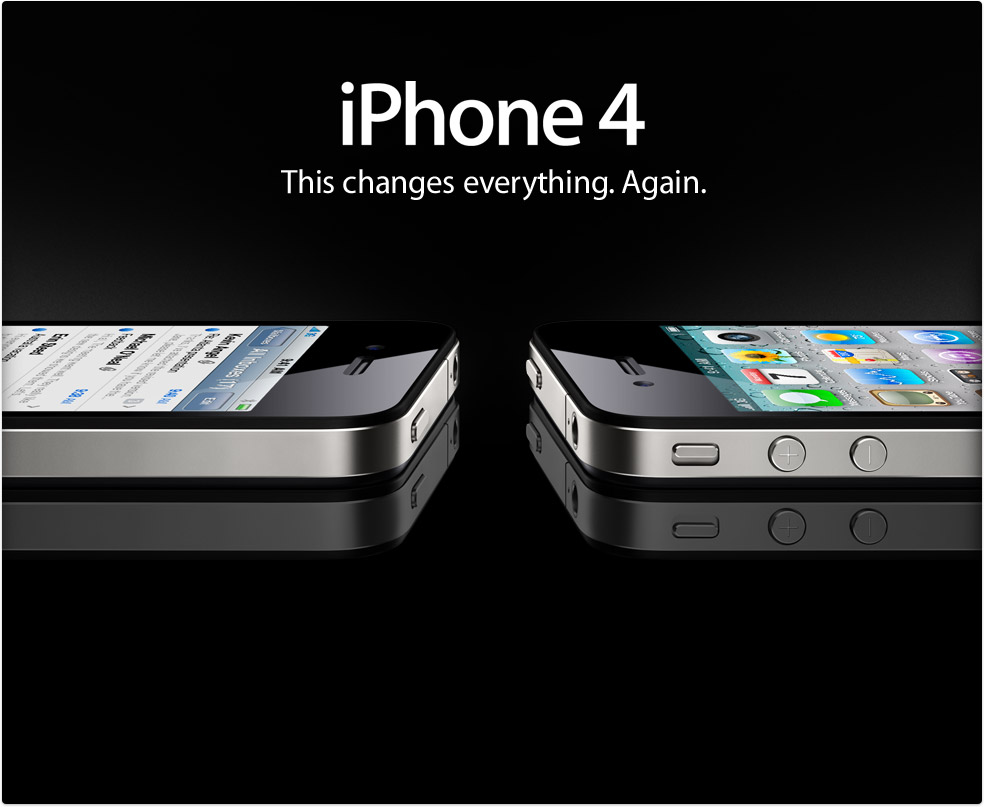
The iPhone 4 is a touchscreen smartphone developed by Apple. It is the fourth generation of iPhone, and successor to the iPhone 3GS. It is particularly marketed for video calling, consumption of media such as books and periodicals, movies, music, and games, and for general web and e-mail access. It was announced on June 7, 2010, at the WWDC 2010 held at the Moscone Center, San Francisco, and was released on June 24, 2010, in the United States, the United Kingdom, France, Germany and Japan.
The iPhone 4 runs Apple's iOS operating system, the same operating system as used on previous iPhones, the iPad, and the iPod Touch. It is primarily controlled by a user's fingertips on the multi-touch display, which is sensitive to fingertip contact.
The most noticeable difference between the iPhone 4 and its predecessors is the new design, which incorporates an uninsulated stainless steel frame that acts as the device's antenna. The internal components of the device are situated between two panels of chemically strengthened aluminosilicate glass. It has an Apple A4 processor and 512 MB of eDRAM, twice that of its predecessor and four times that of the original iPhone. Its 3.5-inch (89 mm) LED backlit liquid crystal display with a 960×640 pixel resolution is marketed as the "Retina Display".
The latest operating system release is iOS 4.3.2.
The iPhone 4 is powered by the Apple A4 chip, which was designed by Intrinsity[citation needed] and, like all previous iPhone models, manufactured by Samsung. This system-on-a-chip is composed of a Cortex-A8 CPU integrated with a PowerVR SGX 535 GPU. The Apple A4 is also used in the iPad where it is clocked at its rated speed of 1 GHz. The clock speed in the iPhone 4 has not been disclosed. All previous models of the iPhone have underclocked the CPU, which typically extends battery life and lowers heat dissipation.
The iPhone 4 has 512 MB of eDRAM. The additional eDRAM supports increased performance and multi-tasking.
The display of the iPhone 4 is designed by Apple and is manufactured by LG. It features an LED backlit TFT LCD capacitive touchscreenwith a pixel density of 326 pixels per inch (ppi) on a 3.5 in (8.9 cm) (diagonally measured), 960×640 display. Each pixel is 78 micrometres in width. The display has a contrast ratio of 800:1. The screen is marketed by Apple as the "Retina Display", based on the assertion that a display of approximately 300 ppi at a distance of 12 inches (305 mm) from one's eye is the maximum amount of detail that the human retina can perceive. With the iPhone expected to be used at a distance of about 12 inches from the eyes, a higher resolution would allegedly have no effect on the image's apparent quality as the maximum potential of the human eye has already been met.
This claim has been disputed. Raymond Soneira, president of DisplayMate Technologies, said in an interview with Wired Magazine, that the claims by Jobs are something of an exaggeration: "It is reasonably close to being a perfect display, but Steve pushed it a little too far." Soneira stated that the resolution of the human retina is higher than claimed by Apple, working out to 477 ppi at 12 inches (305 mm) from the eyes.
However, Phil Plait, author of Bad Astronomy, whose career includes a collaboration with NASA regarding the camera on the Hubble Space Telescope, responded to the criticism by stating that "if you have [better than 20/20] eyesight, then at one foot away the iPhone 4’s pixels are resolved. The picture will look pixellated. If you have average eyesight, the picture will look just fine."
The iPhone 4 features a redesigned structure, designed by Jonathan Ive. Most notably, the bulges of the back panel as well as the band between the front and back are gone and have been replaced with flattened surfaces. The redesign reflects the utilitarianism and uniformity of existing Apple products, such as the iPad and the iMac. From the side, the metal structure most resembles the original iPhone, but from the rear, the black plastic evokes the iPhone 3G and 3GS. The general layout of the device remains the same. The overall dimensions of the iPhone 4 have been reduced from its predecessor. It is 4.5 inches (110 mm) high, 2.31 inches (59 mm) wide, and 0.37 inches (9.4 mm) deep, compared to the iPhone 3GS, which is 4.55 inches (116 mm) high, 2.44 inches (62 mm) wide, and 0.48 inches (12 mm) deep; making the iPhone 4 24% thinner than its predecessor, the iPhone 3GS. Steve Jobs claims that it is “the thinnest smartphone on the planet". The reduced size of the device is primarily due to the externally placed antenna.
The iPhone 4 is structured around a stainless steel frame that wraps around the edge of the phone, acting both as the primary structure for the device and as the iPhone 4's antennas. This metal band features two slits on the GSM version of the phone, one at the lower left, and one at the top (and a fake slit along the lower right, to cosmetically mirror the one at the lower left) that divide the band into two antenna sections: the left section of the band serves as the Bluetooth, Wi-Fi, and GPS antenna, and the right and lower sections of the band act as the antenna forGSM and UMTS connectivity. On the CDMA version of the phone, however, there are four slits in the metal band. Two at the top (on the left and right) and two at the bottom. This divides the metal band into four different segments, which like the GSM version of the phone, serves as different antennas for connectivity. The top portion of the band (divided by the top left and right slits) is for connecting to the CDMA network. The left portion of the metal band is for Bluetooth, Wi-Fi, and GPS just like the GSM version. The right side is not an antenna, but serves to cosmetically mirror the left side and also to create a similar look to the GSM version of the phone.
The internal components are situated between two panels of aluminosilicate glass, described by Apple as being "chemically strengthened to be 20 times stiffer and 30 times harder than plastic," theoretically allowing it to be more scratch resistant and durable than the previous models.
In fall 2010, Pentalobular screws started to replace the Philips screws used in post-repair units in the US and in production units in Japan.
Put your ad here
 |
|
|
|---|